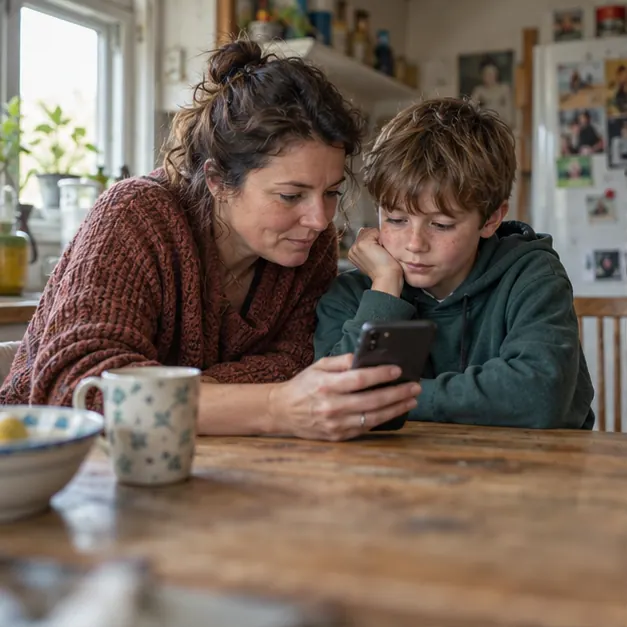
You do not need to know every app before you can help. The most useful starting point is curiosity: ask what your child likes doing online and let them show you. A conversation that happens before there is a problem makes it easier to talk when there is one.
Begin with their world
Choose an ordinary moment, not a surprise inspection. Ask about a game, creator or group chat they enjoy. Try questions such as: What do you like about it? Who do you usually play or chat with? What do people do if a conversation gets awkward? Listen before offering a fix.
Agree a few clear boundaries
A family agreement works best when it is made together and changes as a child grows. Keep it concrete: where devices charge overnight, what to do before spending money, what information stays private, and which trusted adult they can turn to. Explain why a boundary exists and review it together rather than treating it as a one-off contract.
Keep the conversation going
- Ask occasional open questions instead of checking only after a problem.
- Make space for the good parts: friendship, creativity, learning and fun.
- If you do not know an app, ask your child to show you how it works.
- Revisit privacy, contact and spending settings when an app or device changes.
If they tell you something worrying
Try to keep your first response steady, even if you feel shocked or angry. Thank them for telling you. Ask what they need right now and whether anyone is in immediate danger. Avoid promising that you will keep it secret; explain simply that you may need to involve another trusted adult to help keep them safe.
You do not need to solve the whole problem during the first conversation. Let your child choose a manageable next step with you: mute a chat, block an account, save details of a message, talk to a teacher, or contact a specialist organisation. Keep checking in afterwards so the conversation does not end when the screen is put away.
Make it work for your family
A younger child may find it easier to talk while you play a game together or look at a favourite video. An older child may want privacy, time to think, or a conversation while walking. If your child has additional communication needs, use the format that works for them and make space for pauses. There is no single perfect script; a dependable, non-judgemental response matters more than the exact words.